Robert takes a job at Mike’s father’s store
Rich Dad Poor DadRobert takes a job at Mike’s father’s store as the first step in a practical education about money: at nine years old, he agrees to work for ten cents an hour because Mike’s father promises to teach him through work rather than classroom lessons. The dusty Saturday shifts initially seem to make the boys cheap labor, but their frustration becomes the material of a deliberate test. By resisting increasingly extravagant pay offers, Robert and Mike learn to recognize how fear and desire can govern a person’s choices—and why earning more does not by itself bring financial freedom.
The Offer and the First Shift
After Robert’s first business with Mike had failed, Robert’s father suggested that the boys ask Mike’s father to teach them how to become rich. Mike’s father agreed to meet them, and Robert caught a bus to the poor side of town on Saturday morning. The setting offered an immediate contrast with the supposed promise of riches: Mike’s family lived in a small, tidy, aging house, while his father was already busy with work and had employees arriving to consult him. The man who would become Robert’s Rich Dad ran warehouses, a construction company, a chain of stores, and three restaurants.
On the back porch, Mike’s father made the terms plain. He would teach the boys if they worked for him, not if they merely sat and listened. When Robert asked whether he could first ask a question, Mike’s father refused: the boys had to decide quickly, because recognizing and acting on an opportunity was part of the lesson. Robert and Mike accepted. Robert had a softball game that day, but when the choice became work or leave, he chose the job and the chance to learn.
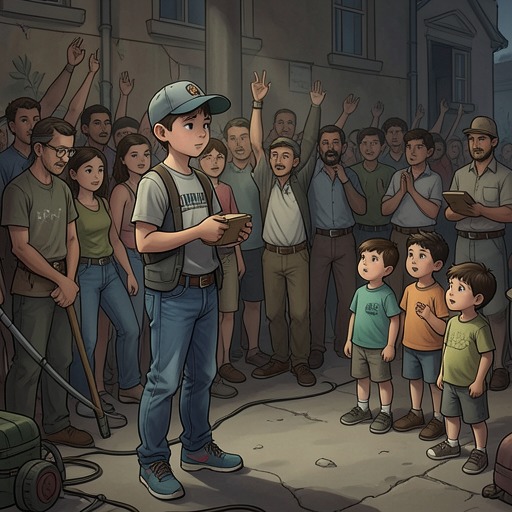
The pay was ten cents an hour, strikingly little even by 1956 standards. Robert and Mike worked three hours each Saturday for Mrs. Martin, a patient but exacting manager who kept them at their tasks. They removed canned goods from shelves, dusted each can with a feather duster, and stacked the cans again. The work was monotonous, and the store’s open doors let road dust blow inside whenever cars passed or pulled into the parking lot. With no air conditioning, the doors could not be closed; the dust helped ensure that there was always more cleaning to do.
Thirty Cents and Frustration
For three weeks, the boys returned to the store and received three dimes apiece when their shifts ended at noon. Comic books cost ten cents, so Robert generally spent his thirty-cent wage on them. The small payment did not feel like a meaningful reward for hours of tedious work, especially because his real purpose had been to learn from Mike’s father. By the fourth week, Robert was ready to quit. He had not seen Mike’s father since their first meeting and felt that the promised education had not arrived.
When Robert told Mike he was quitting, Mike was not surprised. His father had predicted that Robert would reach this point and had instructed Mike to tell him to come back when he was ready to quit. The delay was part of the teaching method: instead of immediately explaining the lesson, Mike’s father let the experience accumulate until the boys had something concrete to examine. Robert, however, approached the next meeting angry and suspicious. His own father considered the arrangement exploitative and told him to demand at least twenty-five cents an hour or leave the job. The two fathers thus framed the same employment in opposing ways: one emphasized fair pay and protection, while the other treated the boys’ dissatisfaction as a lesson in how people respond to money.
Waiting and the Pay-Raise Test
On Saturday morning, Mike’s father told Robert to sit and wait. Robert waited in the dark, musty living room while other people met with the employer and left. Forty-five minutes passed; the two women he had seen on his first visit had already gone, and an older man had also completed his meeting. The wait sharpened Robert’s resentment. He came to see Mike’s father as a cheapskate who exploited children, and the scene made his anger—not simply his low wage—part of the coming lesson.
When the conversation turned to pay, Mike’s father offered Robert twenty-five cents an hour, then a dollar, two dollars, and finally five dollars. Each increase made the choice harder. At nine years old in 1956, Robert could imagine what even two dollars an hour might buy: a bicycle, a baseball glove, and the approval of schoolmates who had called him poor. His desire for the money was real, but he kept silent as the offers rose. At five dollars an hour, an amount beyond what many adults earned, the temptation became so extreme that it lost its power. Robert and Mike looked at one another; the needy part of Robert that wanted to accept the offer had been quieted, and he felt a new certainty about money.
Mike’s father explained that most people have a price because fear and greed—or, as he also calls it, desire—shape their reactions. Fear of being without money drives people to work; once they receive a paycheck, desire turns toward the things money can buy. Higher pay can enlarge spending without breaking the underlying cycle. He names that repetitive pattern the Rat Race: getting up, going to work, paying bills, and starting again. The staged raises had therefore tested not only whether the boys wanted more money, but whether they could pause before letting the prospect of it decide for them.
From Wage Work to Financial Literacy
The lesson does not end with the boys refusing a higher wage. Mike’s father tells them that the first step is to be truthful with themselves about how they feel. People trapped by fear often react by working for money in the hope that a paycheck will remove their anxiety; when the fear remains, they return to work and repeat the response. Desire adds another pull, promising new possessions as the reward for continued effort. Mike’s father’s donkey-and-carrot comparison makes the mechanism visible: the apparent prize keeps moving ahead, while the person chasing it may not see where the pursuit leads.
He does not present the lesson as a rejection of school or employment. He says that school matters for learning a profession and contributing to society, but that it does not teach people how to master money or handle the fears attached to it. Robert’s educated father represents genuine learning and a successful career, yet Robert comes to understand that he can learn different, important things from each father. Mike’s father’s aim is not merely to make the boys rich; it is to keep them from becoming high-paid slaves to money by teaching them to use emotion in their favor rather than letting emotion control their thinking.
The job’s narrative importance lies in the contrast between what the boys initially expect and what the work supplies. Robert wants instruction in making money and instead gets dusty shelves, thirty cents, a long wait, and a series of offers designed to expose his own appetite for pay. Those ordinary details turn employment into an experiential lesson: the boys first feel the pull of low wages and then the pull of wealth, before being asked to notice the pattern linking them. In later examples, the same concern appears in the author’s CASHFLOW game, which teaches players to follow cash moving between income statements and balance sheets, and in his account of a Phoenix property opportunity lost when an acquaintance listened to a non-investing neighbor’s warning. These later discussions extend the episode’s central distinction between reacting to fear or desire and stopping to think, rather than changing the original job’s outcome. The store job thus begins a recurring education in financial literacy: work can provide a way to learn, but wages alone do not explain how money works or free the worker from the cycle of earning and spending.